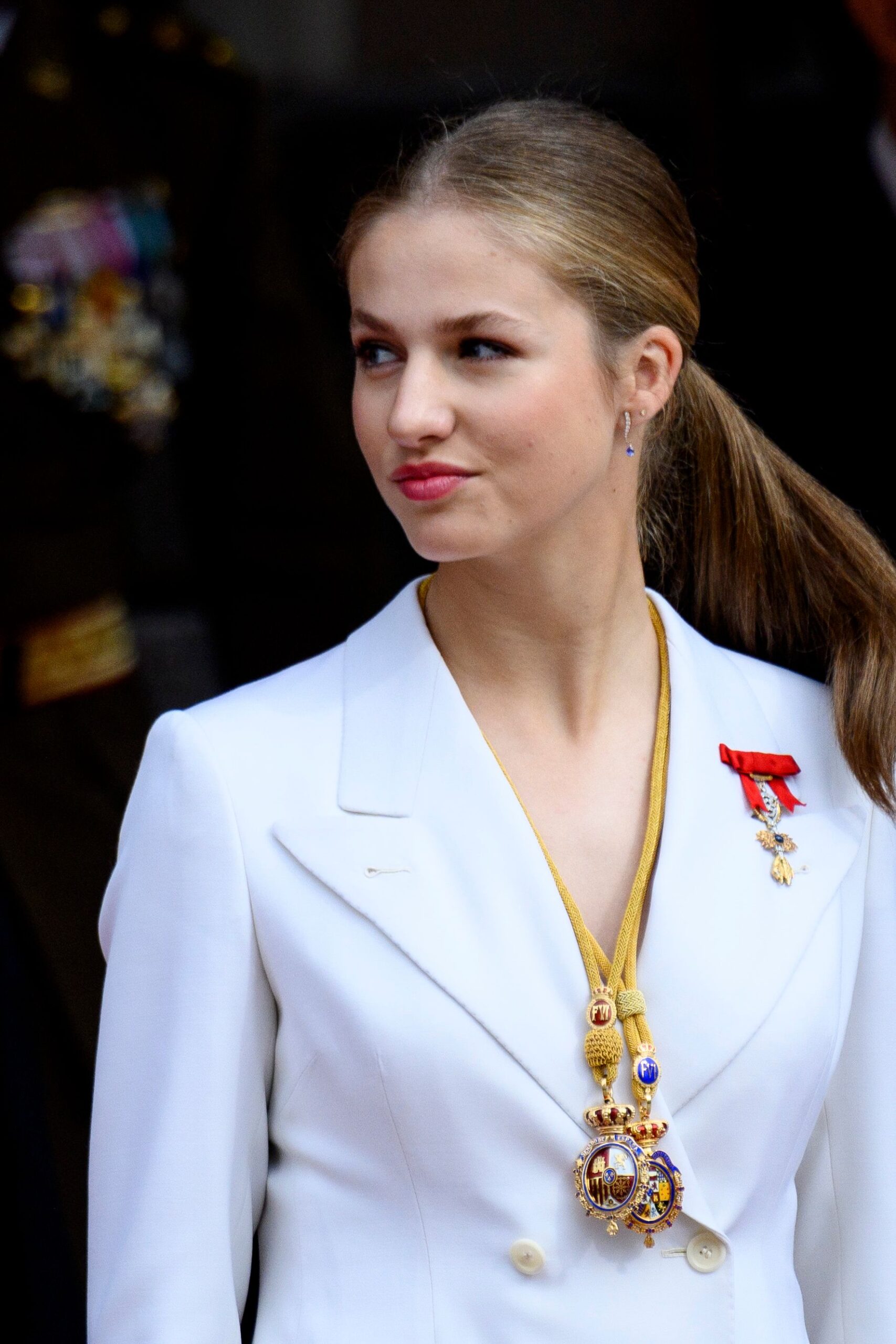
As Europe experiences political polarization, economic shifts, and cultural evolution, few young leaders have drawn as much attention as Princess Leonor of Spain. At 19 years old in 2025, she has stepped into a role that carries enormous historical weight—yet she approaches it with a maturity and modern perspective rarely seen in royalty.
Leonor is not simply preparing for a ceremonial future. She is gradually becoming a key figure in Spain’s national identity, diplomatic presence, and modernization efforts. With her public engagements, discipline, and leadership, she shows signs of becoming a monarch who blends tradition with forward-thinking values.
This expanded analysis covers:
- Her background and upbringing
- Her military and academic journey
- Her leadership approach
- Her impact on Spain’s global image
- How she is reshaping the monarchy from within
- What her future reign may look like
A Carefully Structured Royal Upbringing
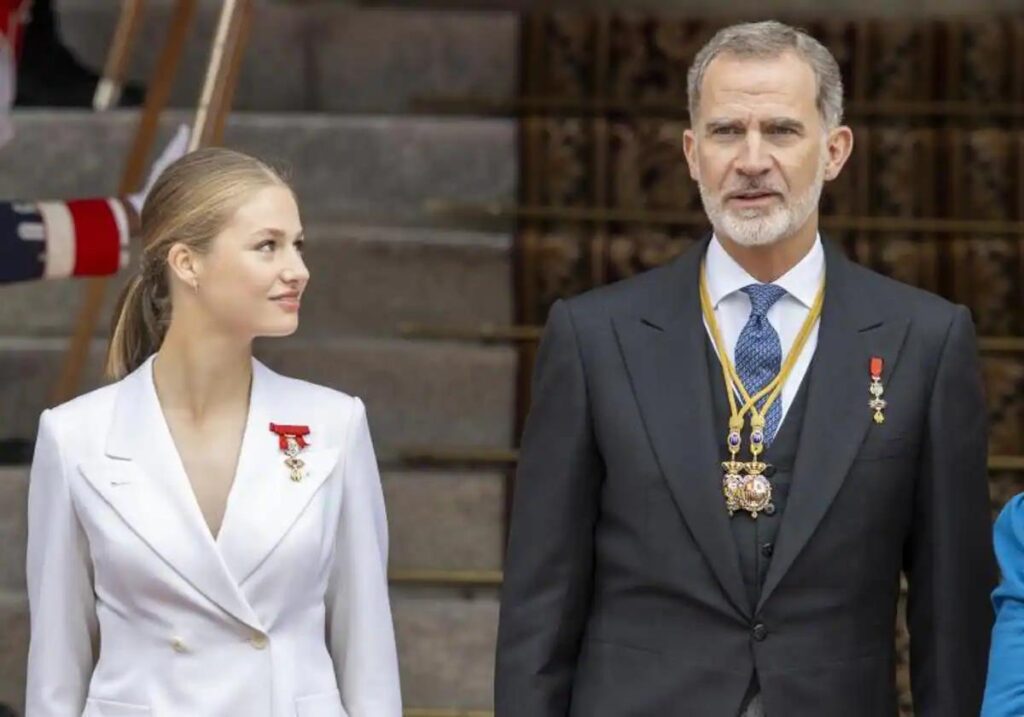
Princess Leonor was born into a monarchy that had to earn public trust after decades of political tension. Her parents, King Felipe VI and Queen Letizia, crafted her upbringing with long-term stability in mind.
A Childhood Designed for Responsibility
Unlike previous heirs who grew up secluded, Leonor was raised with:
- Exposure to diverse cultures
- A strict but modern educational environment
- Regular interactions with people outside royal circles
- An emphasis on discipline, humility, and service
Her early public appearances—small speeches, national events, and award ceremonies—were not just symbolic. They prepared her for the pressures of leadership in a democratic society.
Leonor’s Military Training: Symbolism and Substance
In Spain, the monarch traditionally serves as Head of the Armed Forces, but Leonor’s training goes beyond protocol.
Multi-Branch Military Formation
She completed training in:
- The Army (with drills, survival training, field strategy)
- The Navy (including time aboard Spain’s training ship Juan Sebastián de Elcano)
- The Air Force (learning flight basics and aeronautics)
This makes her one of the best-prepared heirs in modern European royalty.
Why This Matters
Her military training reflects:
- Commitment to national unity
- Understanding of defense and strategic affairs
- Respect for Spain’s armed forces, who play an important role in national identity
It also reinforces her credibility as a future head of state.
Rigorous Academic Path and Global Education
Parallel to her military formation, Leonor pursued an academically focused path.
Studies in International Relations & Political Science
Her academic preparation emphasizes:
- constitutional law
- diplomacy
- international policy
- European relations
She has been educated to understand how modern democracies function, something essential for a constitutional monarch.
Mastering Languages
Leonor speaks:
- Spanish and English fluently
- Catalan, Basque, and Galician (regional languages of Spain)
- Some French and Arabic
This linguistic versatility strengthens her image as an inclusive future queen capable of representing all of Spain.
Leadership Style: Calm, Empathetic, and Principled
At public events, Leonor consistently demonstrates qualities that distinguish her from traditional royalty.
1. Composure Under Pressure
Her speeches—carefully crafted yet sincere—show confidence without arrogance. She rarely shows nerves, even during national ceremonies watched by millions.
2. Emotional Intelligence
She listens attentively, interacts respectfully, and engages with citizens on a personal level. Her empathy has become one of her most appreciated traits.
3. Duty Above Privilege
Leonor repeatedly emphasizes:
“I understand what my role means, and I will fulfill my duty with loyalty and responsibility.”
This sense of obligation over entitlement resonates strongly with modern Spaniards.
A New Vision for the Spanish Monarchy
Princess Leonor is redefining royal traditions in several meaningful ways:
1. Modernizing Public Engagement
Traditionally, Spanish royals maintained strict formality. Leonor has introduced subtle but significant changes:
- More youth-focused events
- Visits to tech centers, universities, cultural hubs
- Engagements with innovators, environmentalists, and educators
- Less distance between royalty and citizens
She presents herself not as a distant royal figure, but as someone connected to the realities of modern Spain.
2. Promoting Gender Equality
As Spain’s first future queen in modern history, Leonor challenges centuries of male-dominated monarchy.
Her future reign symbolizes:
- progress in gender equality
- a break from patriarchal traditions
- recognition of women in leadership roles
Her visibility encourages young women across Spain to pursue leadership paths in government, military, science, and public service.
3. Representing Unity in a Politically Complex Nation
Spain faces ongoing tensions between regions like Catalonia and the central government. Leonor’s multilingual, culturally sensitive approach makes her a unifying figure.
She emphasizes:
- respect for regional identities
- dialogue over division
- national unity rooted in shared values
Her non-political yet symbolic position makes her a bridge between communities.
A Rising Diplomatic Force
As her role grows in 2025, Leonor increasingly becomes part of Spain’s diplomatic image.
Strengthening Spain’s Global Presence
She participates in:
- EU youth summits
- international cultural exchanges
- meetings with foreign dignitaries
- state commemorations
Her polished speeches and multilingual ability create a positive international impression.
Why Global Diplomacy Matters for Spain
In an era of:
- global interdependence
- European political shifts
- economic competition
Spain benefits from a charismatic, well-prepared heir who can serve as a symbol of stability.
Leonor fulfills that role remarkably well.
Media Strategy: Controlled, Professional, and Modern
Leonor’s public image is tightly managed but with a modern tone:
- limited but meaningful social media presence
- carefully curated photos and statements
- transparent communication without overexposure
She avoids scandals, political statements, and excessive glamour—focusing instead on substance, education, and duty.
2025: A Year of Transition Into Mature Leadership
This is the year where:
- she takes on more independent duties
- begins representing her father at major events
- her military training reaches its final stages
- she becomes more visibly active in national ceremonies
2025 marks the transformation of Princess Leonor from a royal teenager into a mature, prepared future queen.
What Her Future Reign May Look Like
If Leonor becomes queen, she will likely:
- maintain strict ethical standards and transparency
- emphasize education, youth empowerment, and modern innovation
- strengthen Spain’s unity and European partnerships
- continue military engagement and support national defense
- modernize ceremonial roles to make them more relevant
- remain nonpolitical but socially conscious
Her leadership style will likely be calm, principled, and duty-focused, similar to her father but more modern and youth-driven.
Final Thoughts
Princess Leonor represents a new model of monarchy—one built on education, discipline, empathy, and modern values. In 2025, she is not merely inheriting a tradition; she is reshaping it.
Spain’s future queen is creating a legacy even before she wears the crown:
- a monarchy connected to people
- a symbol of unity and progress
- a leader prepared for the complexities of the modern world
In every appearance, every speech, and every step of her training, Princess Leonor proves that the future of Spain’s monarchy is not only secure—it is evolving in the best possible way.